I never had the chance to meet my paternal grandparents, John and Anastasia (or Lily, as she was known) Collins. They died long before I was born, and growing up, even their names were lost to me. My father, Thomas Raymond Collins, rarely mentioned them.
I was determined to find out about Lillian, who she was, where she was from, and why she came to Swansea. Almost an obsession! So, with nothing but scraps of family lore, I began the long journey of piecing together our family's past. I scoured genealogical websites and forums, and after years of searching, I finally found myself in a Roots Chat conversation that unlocked a breakthrough. A hallelujah moment for me. In July 2017, a few wonderful people on the forum helped me piece together forensic details that gave me real clues to follow. And so I found Anastasia Lily Doyle, latterly known as Lillian or Lily Collins.
I couldn't resist the pull; I spontaneously arranged a trip to Wexford in the August to pursue the leads in person. There, I encountered Michael at the Wexford Library—a man who spent hours walking me through local records, uncovering pieces of my family's story one by one. With his help, along with guidance from a kind fellow at Crosstown Cemetery and Jean from Wexford Council's graves section, I confirmed that I had indeed found my grandmother's family. I discovered they'd once lived above what's now a betting shop near Cornmarket and traced my ancestors to a gravestone that included my great-grandfather, great-grandmother, great-great-grandmother, and great-uncles. I even found an obituary marking my grandmother's presence at her father's funeral, finally linking her to her Wexford roots and bringing to life the person my great grandfather was.
.jpg)
Wexford, late 19th century — the world the Doyles came from
Although the roots of the Doyle family extend beyond him, for the purposes of this story, the Doyle lineage begins with Luke Doyle, born in 1835 in New Ross, Wexford, to John Doyle. On 31 July 1861, Luke married Mary Ann Gill, establishing the Doyle line that would eventually connect with Swansea. Luke was a labourer and was living in Templeludigan when he married. Together, they raised two sons: John, born in 1863, and Daniel, born in 1864 in Templeludigan, Wexford. Also a daughter Bridie. Luke lived his life deeply embedded in the Irish community of New Ross, surrounded by the traditions and culture of the Cornmarket area. Luke died in 1900 and his widow Mary moved in with her son and his family in Cornmarket.
My great grandfather, John Doyle, born in 1863 in New Ross, Wexford, was the son of Luke Doyle and Mary Ann Gill. At just 18, he married Anastasia Whelan in 1881. Together, they built a bustling household, having seven children, including my grandmother, Anastasia Lily Doyle, born in 1893. Their lives unfolded primarily in Wexford, with the family home located near the Cornmarket area. John worked as an engine driver for the Great Southern Railway Company in Ireland, dedicating 52 years to the company. According to an obituary published on 6 April 1935, John was a man of "unassuming disposition, most obliging, and very popular with his fellow workers." For many years, he was the engineer for the Sunday excursion trains to Rosslare Strand during the summer months. A lifelong member of the Confraternity of the Holy Family, John's life reflected deep faith and commitment to his community.
My own father said he visited Wexford with his mother to visit family and certainly there is evidence of Lillian travelling back home.
John's first wife Anastasia passed away in 1905 and by 1911 he had remarried Bridget Carroll. After Anastasia's passing, John continued to live in the Cornmarket area, where he remained until his death in 1935. This marked a turning point in the Doyle family's story and the direction of Lillian's life.
.jpg)
The Doyle family gravestone, Wexford — Anastasia, John, and their son Dan
Anastasia Lily Doyle made the journey to Swansea alone after her mother passed away and the ensuing turmoil with her father's remarriage. We don't know exactly when but she is still in Wexford in the 1911 Census and then pops up in the 1919 electoral register in Swansea at Llangyfelach Road. This main hub of Little Ireland is where she would meet her husband and live her life in Swansea for many years.
A distant cousin who shares the same great grandfather in John Doyle I found said that there were lots of stories about the Doyles. Rumour has it Anastasia and other Doyle siblings left Wexford for Swansea because of their relationship with their stepmother.
We know Daniel was stationed in Swansea intermittently due to his enrolment in the Royal Navy from 1908 and was certainly living at 38a Llangyfelach Street in 1919 with Francis Lock. Another of Anastasia's sisters, Mary Anne (Cissie) also came to Swansea and married Francis Lock. Rumour also has it they came back and took young relative, Sonny Sheffield back to Swansea with them. This was later confirmed by another distant cousin.
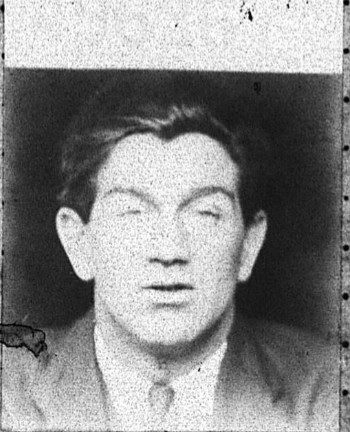
Daniel Doyle — Royal Navy
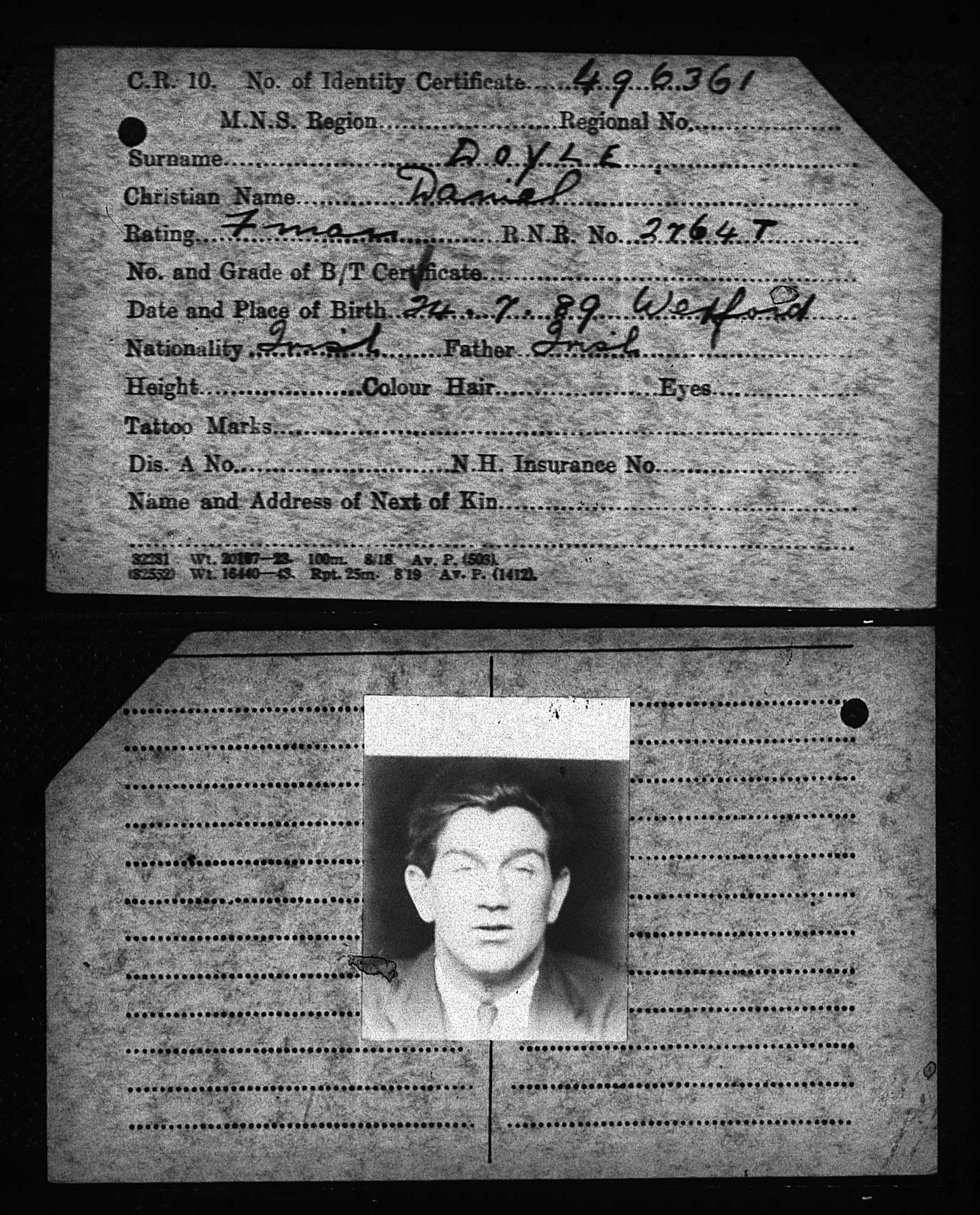
Daniel's Merchant Seaman identity certificate
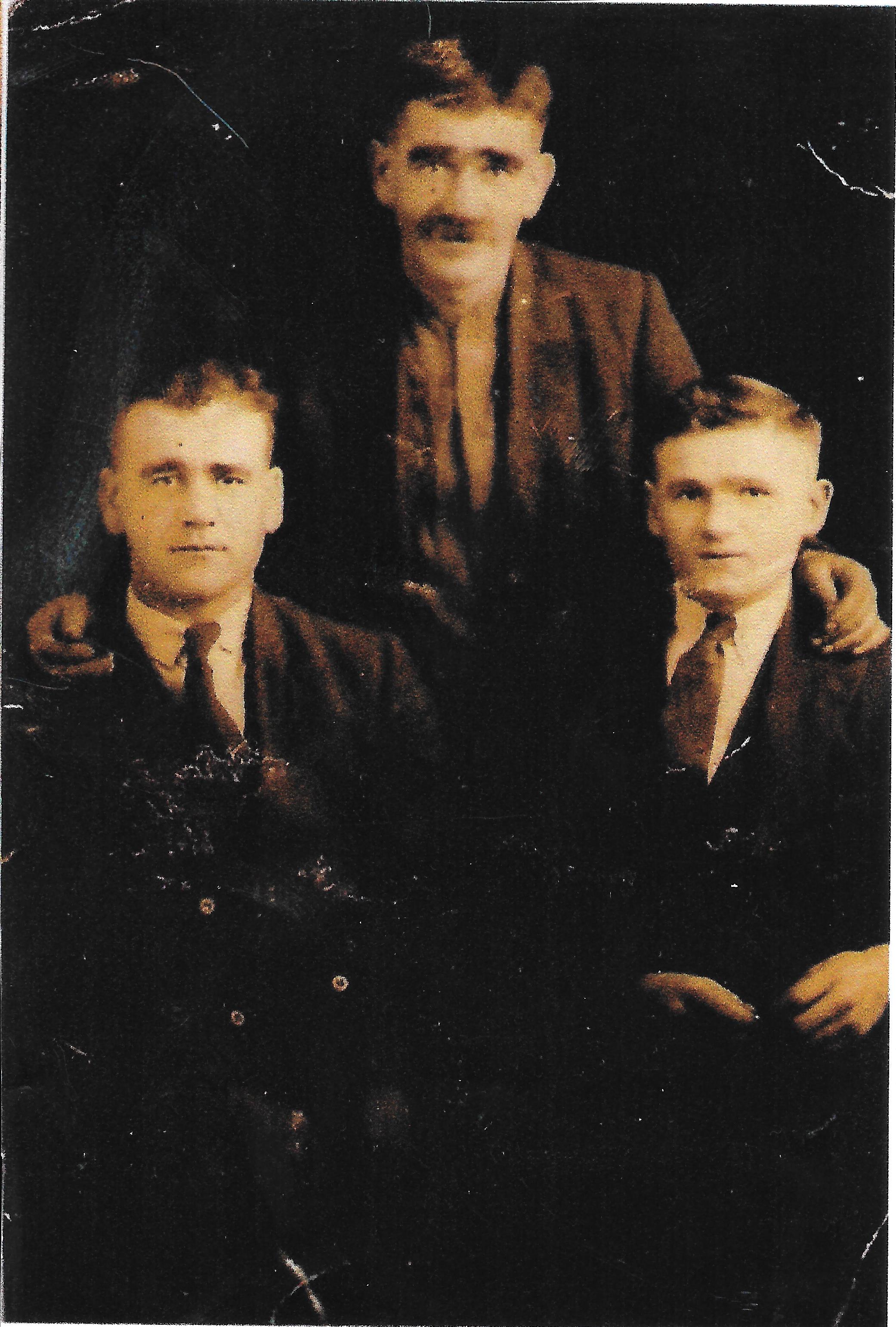
Luke Doyle and Sonny Sheffield — brought to Swansea by the Doyle aunts
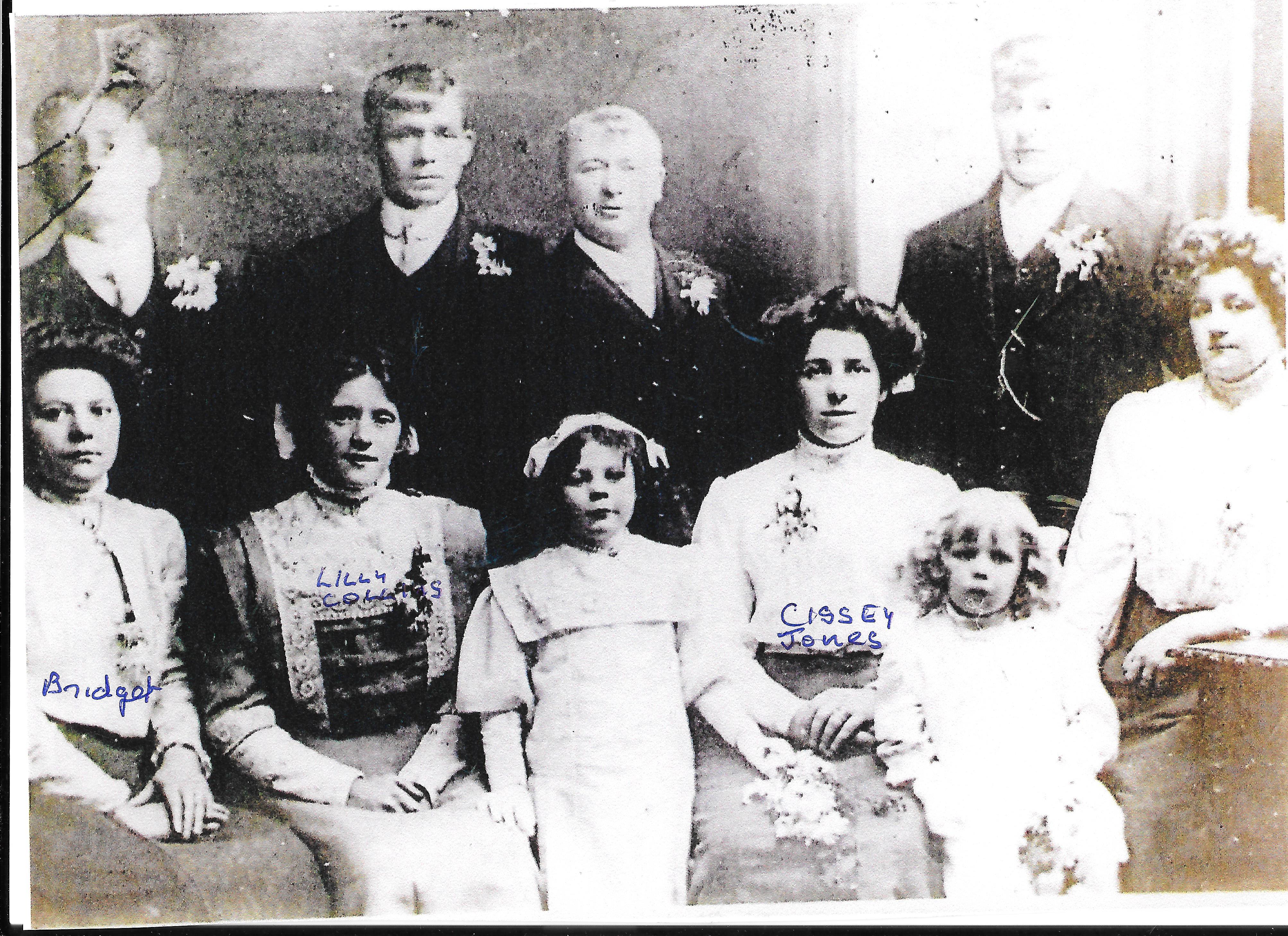
A family gathering — Lilly Collins and Cissie Jones, centre left and centre right
It was also said that John Doyle had left nothing in his will to his first family. All was left to his second wife and children with her.
Lilian never went far from that first address in Llangyfelach Street. Her sister, Cissie, remained there with her husband Frank Lock for many years.
In the early 1900s, Llangyfelach Street in Swansea's Greenhill area was part of a bustling, working-class neighbourhood. Greenhill was known as Little Ireland. The Great Famine in Ireland and the opportunity for a better life working in the new industrial Copperopolis brought many people over to the area.
Llangyfelach Street would have been densely packed, with terraced houses built close together. Greenhill was a tough place to live. Life was hard, with deprivation, limited sanitation and cramped living conditions, but the shared Irish heritage fostered a strong sense of community.
St. Joseph's Church, the Catholic church around which much of this Irish community revolved, was a short walk away — a cultural anchor offering community gatherings, support, and a sense of continuity for Irish immigrants.
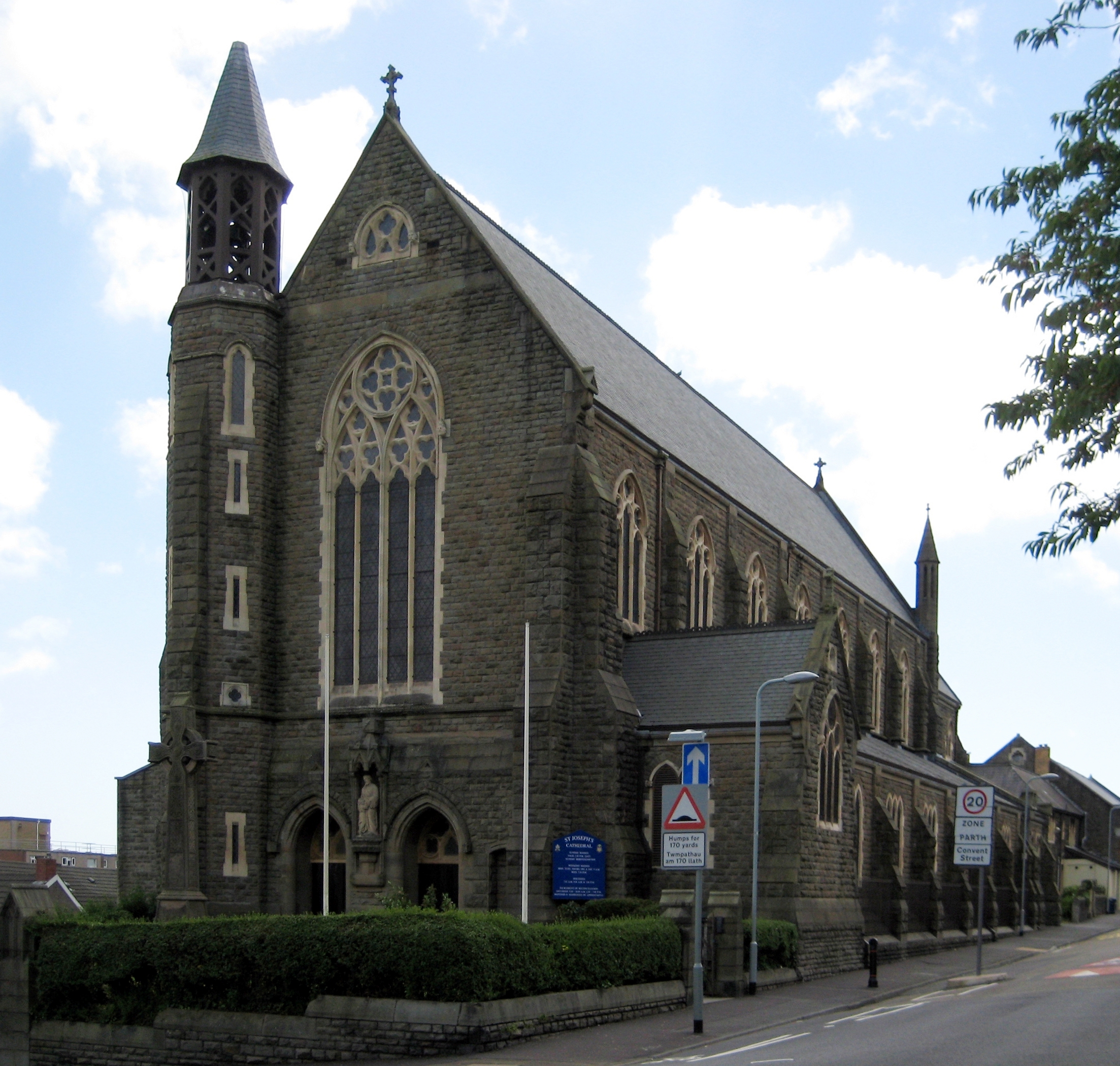
St Joseph's Church, Swansea — where Lilian and John married in 1920
Lilian met and married John Joseph Collins at St. Joseph's Church in 1920, unifying the Collins and Doyle lines. At the time, she was living at 38a Llangyfelach Street, the same address where her brother Daniel had stayed with her in 1919. It was a home shared with family, as it so often was for the Doyles.
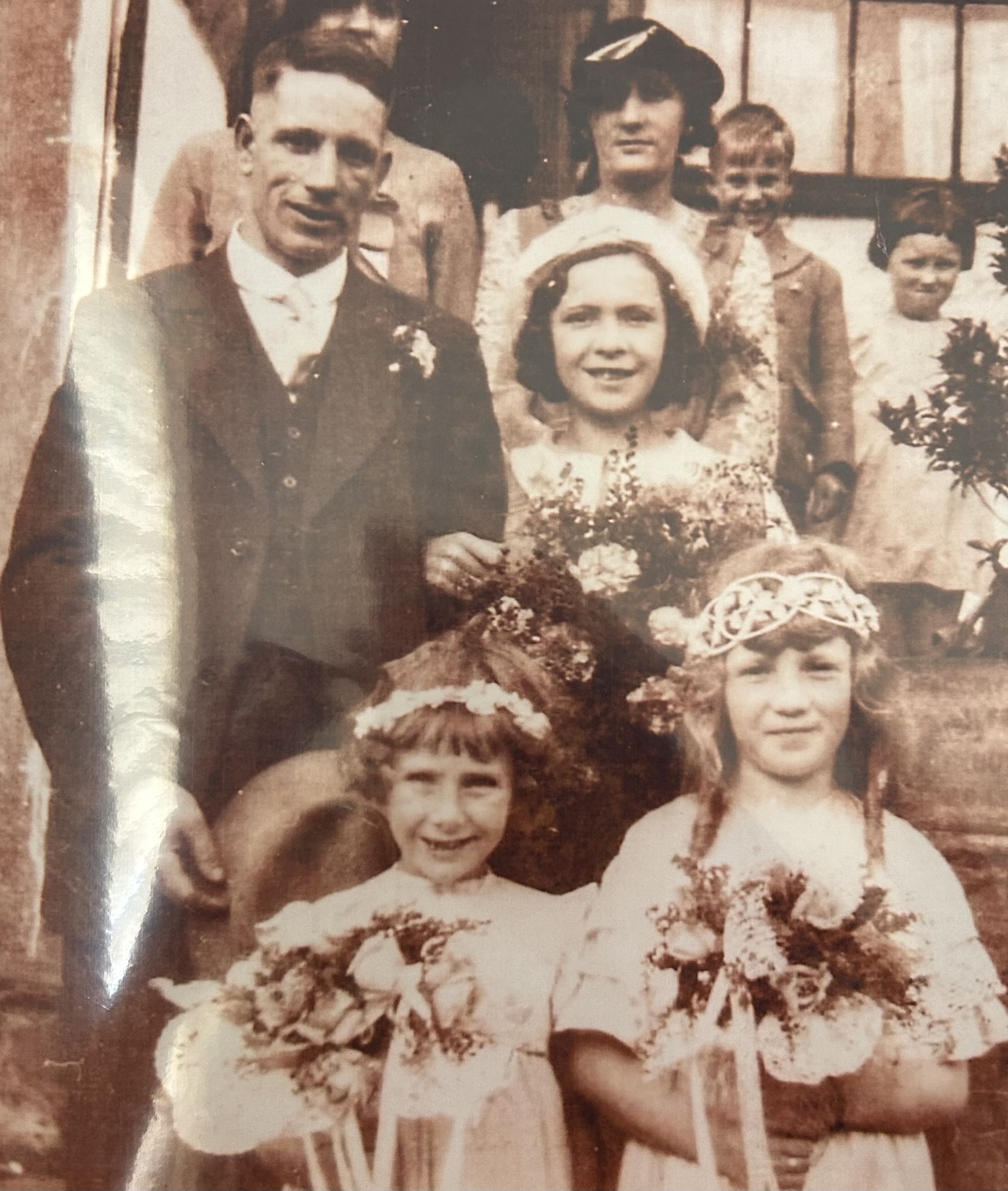
The wedding of John Collins and Lily Doyle, Swansea, 1920
John had lived just a few doors up from Lilian on Llangyfelach Street. Within a year of marriage the first child came, with my father born the last but one of seven children. John worked in the copperworks at least until the 1939 census, heavy and dirty work.
Together, they established a home in Greenhill, living next to family and carrying forward the traditions of both Irish and Welsh heritage. Their life together spanned several residences, including 52 Llangyfelach Street and 99 Llangyfelach Street, as well as Anne Street, before they eventually settled at 160 Llangyfelach Street.
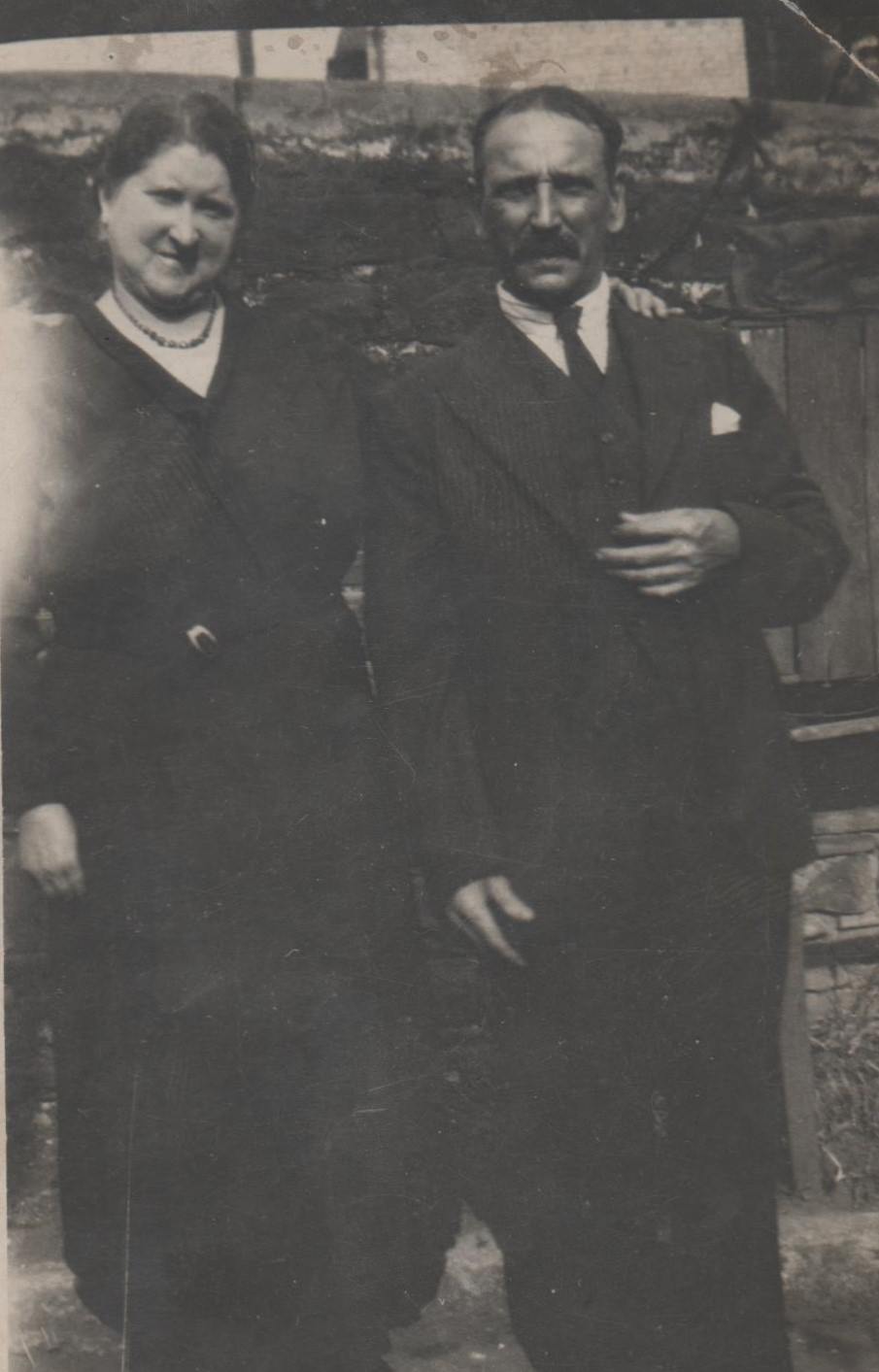
John and Lilian Collins — possibly Swansea
Sadly Lilian died in 1958 at the age of 65, with John at her side at their home in Llangyfelach Street, where she had begun her journey to Swansea.